
Stress Statistical Data
Educating staff on bio-data and it’s impact on workplace culture is crucial. Crucial for several reasons, which can be understood through a combination of qualitative and quantitative data sets.
Dr. Alicia Mckoy
4/22/20262 min read
The SDNN values mostly fall within a healthy range, but the lower end suggests periods of reduced HRV, which can be indicative of stress or lower adaptability of the autonomic nervous system.
The RMSSD values are somewhat elevated, especially at the highest points, which generally indicates a good level of parasympathetic activity and relaxation. However, the lowest RMSSD values approach levels that could signal potential stress or strain.
Educating staff on emotions (and the underlying stress hormones) and their impact on workplace culture is vital for enhancing emotional intelligence, mental health, and overall productivity. Emotional education fosters better interpersonal relationships, reduces stress, and promotes a supportive and inclusive environment. It leads to improved leadership, decision-making, and conflict resolution, which are essential for a positive workplace culture.
From an economic perspective, emotional education boosts productivity, reduces absenteeism, and increases job satisfaction, leading to lower turnover rates and attracting top talent. Implementing training programs, support systems, and policies that promote emotional well-being can create a resilient, engaged, and productive workforce, ultimately benefiting both employees and the organization.
This is an example of HRV biodata that we process using our proprietary AI algorithm while the user spent 8-minutes in one of our VR simulations:
Interpreting bio-data can be tricky. What is a significant change and what matters? Most of us are not educated on our stress loads, let alone how our biometrics play into it.
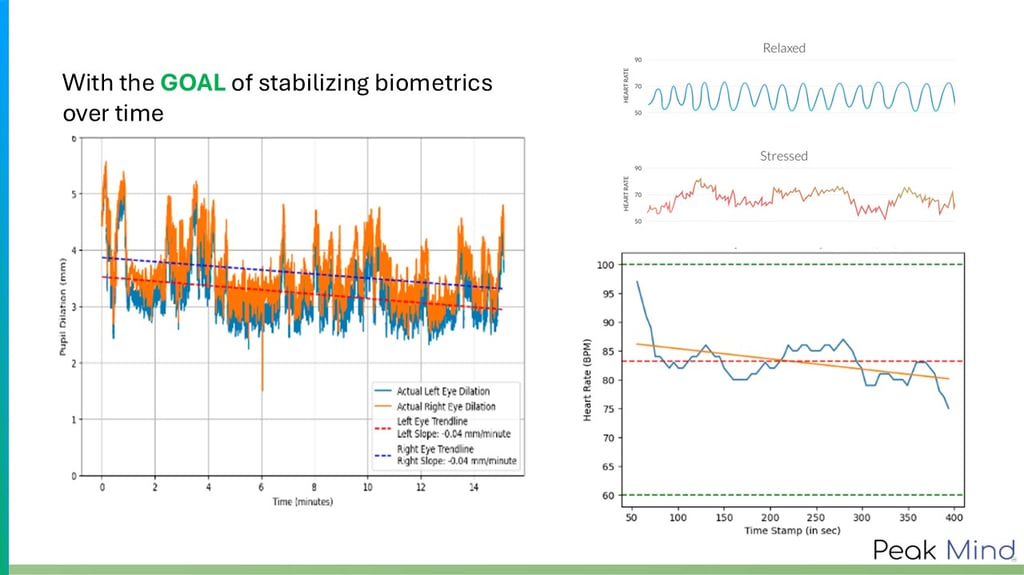
For instance, the visualization and interpretation of the heart rate data over time below has been created, with normal adult heart rate ranges marked and an indicator for when the heart rate exceeds 5% above the average. Significant fluctuations in heart rate, especially those exceeding 5% above the average, may suggest moments of stress, physical exertion, or other factors affecting the individual's cardiovascular system. Monitoring such changes can provide insights into an individual's overall well-being and stress levels.
This is an example of HR biodata that we process using our proprietary AI algorithm while the user spent 8-minutes in one of our VR simulations:
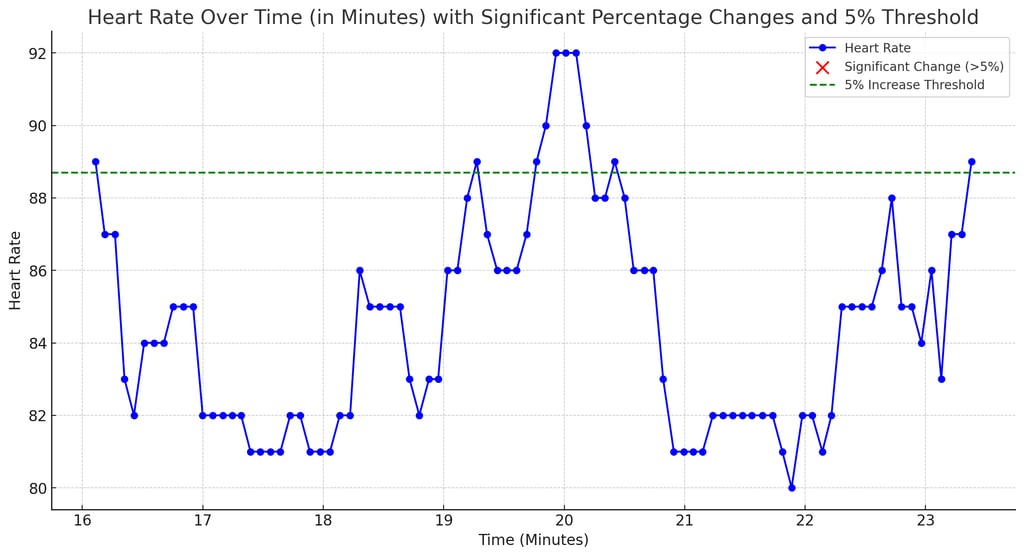
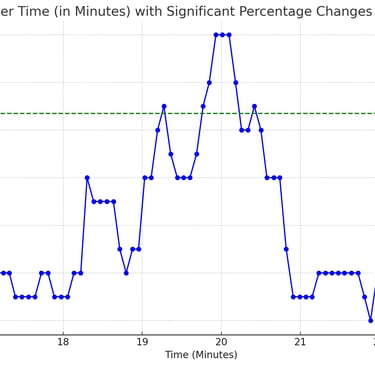
Significant Decreases (>5%) which are sharp decreases, might indicate a transition to a more relaxed state or recovery phase. However, if these are too frequent, they could indicate an abnormal cardiovascular response. Whereas, consistent Minor Fluctuations are small percentage changes (below 5%) which typically indicate normal physiological variations, and might not be significant enough to impact well-being adversely. So, small and big changes can mean many things, which adds to the confusion when monitoring many biometrics.
Phew… need a bio-break now?! And we just discussed a small fraction of the bio-data that our company analyzes and measures so you don’t have to stress over it!
Contact
Reach out for VRx well-being pilots and studies today
Phone
Connect@ThriveXReality.com
+1-317-499-6879
© 2026. All rights reserved.
Disclaimer: These statements have not been evaluated by the Food and Drug Administration or MHRA. Peak Mind products and recommended hardware are wellness devices intended to help manage stress, challenging days, and to promote a healthy lifestyle. Peak Mind products are not intended to diagnose, treat, cure, or prevent any disease. Use only as directed. The information provided herein is intended for your general knowledge only and is not intended to be, nor is it, medical advice or a substitute for medical advice. If you have a specific medical condition or disease, this device is not intended to treat that condition. ThriveXR is not commercially available in market today, we are in piloting and clinical research phases.